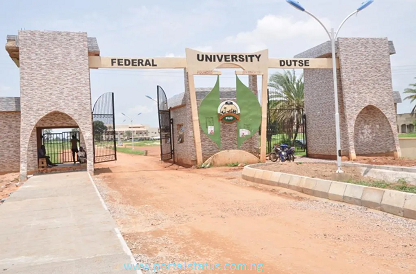
ASUU Warns of October 13 Strike amid Unmet Demands – Nigeria’s public university system might soon be facing another round of disruptions as the Academic Staff Union of Universities (ASUU) has officially announced its intention to begin a two-week warning strike starting Monday, October 13, 2025.
The union, which represents academic staff across federal and state universities, says the move is unavoidable following what it calls the government’s persistent neglect of long-standing agreements and unfulfilled promises.
Unless the Federal Government intervenes at the last minute, university campuses nationwide could soon go quiet once again, classrooms empty, labs abandoned, and students forced into yet another unexpected break.
ASUU Warns of October 13 Strike amid Unmet Demands -What Triggered It All
The development stems from a confidential document titled “Strike Bulletin One” that began circulating among ASUU branches earlier this week. Although it was intended for internal communication, it quickly made its way to the public, confirming what many had feared, that another strike might be on the horizon.
In the bulletin, ASUU’s National President, Professor Chris Piwuna, expressed deep frustration over the government’s inaction. He explained that the union had already issued a 14-day ultimatum, hoping that the Federal Government would finally take tangible steps toward resolving their grievances.
Unfortunately, according to him, “no meaningful progress” has been made.
“We gave a 14-day ultimatum for the government to address the issues in the renegotiated 2009 ASUU-FGN Agreement transmitted since February 2025,” Prof. Piwuna wrote. “We’ve seen no real effort or commitment.”
That statement captures years of accumulated frustration. After numerous committees, memorandums, and roundtables, lecturers say they’re done waiting. The planned two-week strike, they insist, is not just another protest, it’s a warning shot.
ASUU Warns of October 13 Strike amid Unmet Demands – ASUU’s Long List of Unresolved Demands
For many Nigerians, this may feel like déjà vu. ASUU’s demands have echoed through headlines for years, yet few of them have been fully addressed. The issues at stake are both economic and structural, all tied to the declining state of public university education in Nigeria.
The union’s major concerns include:
- Implementation of the renegotiated 2009 ASUU-FGN Agreement
- Revitalization funds for public universities to improve facilities and infrastructure
- Payment of outstanding salary arrears ranging from 25% to 35%
- Resolution of delayed staff promotions, some of which have lingered for over four years
- Settlement of withheld third-party deductions, including cooperative dues and pension contributions
Each of these demands has been on the table for years. Governments come and go, but the promises remain unfulfilled. ASUU insists that the situation is no longer sustainable, arguing that both lecturers and students are the biggest casualties of government neglect.
“Enough of Empty Promises” – ASUU President Speaks Out
In his message, Prof. Piwuna didn’t hold back. He expressed gratitude to members for maintaining patience despite the drawn-out negotiations, but he also emphasized that the time for tolerance has expired.
He described the past eight years of dialogue as “tortuous” — a word that paints a vivid picture of endless meetings, circular discussions, and little to show for it.
“We’ve waited long enough. This isn’t just about salaries or allowances,” he said. “It’s about saving the public university system from total collapse.”
He also called on members nationwide to stand together, reminding them that unity remains the union’s strongest weapon. “When we mobilize, we are powerful; when we complain quietly, we are ignored,” he stated.
It was both a rallying cry and a warning that ASUU intends to act, not talk.
Members Directed to Prepare for Mobilization
The national leadership has instructed all university branches to prepare for immediate mobilization. Members are to take instructions only from their branch chairpersons and ignore unofficial rumors or speculative news.
ASUU’s communication is typically tight and disciplined during strike preparations. Each branch holds its congress meetings, updates members, and awaits final confirmation from the national body before action begins. This structure has kept the union unified even during long and exhausting strike periods in the past.
Government’s Quiet Response
On the government’s side, the silence has been noticeable. The Federal Ministry of Education, through its spokesperson Folasade Boriowo, simply stated that “updates will be shared when available.”
That response, vague as it sounds, mirrors what Nigerians have seen time and again. The pattern has become almost predictable, ASUU issues a warning, the government delays, and just when the strike begins to bite, negotiations restart.
For students and parents, it’s an exhausting cycle. Classes get disrupted, academic calendars are extended, and many young Nigerians lose motivation or even drop out entirely.
Some have already voiced their frustration on social media, saying things like “ASUU again?” and “Will we ever graduate in peace?”
NAAT Joins the Chorus of Frustration
Interestingly, ASUU isn’t the only union raising alarm this time around. The National Association of Academic Technologists (NAAT) has also served the government a 14-day ultimatum, threatening its own industrial action if their grievances remain unaddressed.
In a statement issued after its National Executive Council (NEC) meeting at the Federal University of Lafia, NAAT accused the Ministry of Education, led by Dr. Tunji Alausa, of failing to implement previously signed agreements.
Their major concerns include:
- Incomplete renegotiation of the 2009 FGN/NAAT Agreement
- Failure to mainstream earned allowances into their salary structure
- Non-release of the circular for CONTISS 14 and 15, which affects career progression
- Persistent delays in salary payments
- Exclusion from critical consultations and decision-making processes
NAAT described the situation as “deeply disappointing,” noting that even reports affecting their welfare were submitted to the government without their knowledge or input.
In simple terms, university workers at every level are fed up. It’s not just lecturers this time — the entire ecosystem of academia feels neglected.
The Endless Loop: A Broken System
If you’ve followed Nigeria’s higher education landscape over the years, this situation likely feels painfully familiar. The relationship between ASUU and the government has been strained for decades. Each strike ends with promises, committees, and new deadlines that are rarely met.
The cost of this instability is staggering. Students lose months, sometimes years, of academic progress. Research programs stall. International collaborations are lost. And lecturers, who often earn modest pay compared to their global counterparts, grow increasingly demoralized.
The result? A slow but steady brain drain. Many Nigerian academics have relocated abroad, seeking stability and recognition that local institutions no longer provide.
The system, as ASUU puts it, is “bleeding talent.”
How This Could Affect the Academic Calendar
If the strike begins on October 13, 2025, most public universities will likely halt all lectures, assessments, and administrative functions. While ASUU has emphasized that this is a “warning strike,” such actions often escalate into indefinite shutdowns if no progress is made during the initial period.
For final-year students preparing for graduation, the news is heartbreaking. Some fear that another delay could push their convocation further into 2026. For freshers and continuing students, it means more uncertainty, wasted rent, and disrupted schedules.
Parents, too, bear the burden, emotionally and financially. Many have had to pay for additional accommodation, transport, or online courses during previous strike periods. It’s a ripple effect that reaches every part of society.
Why ASUU’s Fight Still Matters
While some Nigerians have grown cynical about ASUU’s constant battles with the government, others argue that the union’s struggle remains essential.
Their core mission, they insist, is to protect the integrity of public education. Without pressure, the government might abandon the sector entirely, allowing universities to crumble.
The truth is, Nigeria’s higher education system is at a crossroads. Laboratories are under-equipped, lecture halls overcrowded, and research funding almost non-existent. ASUU’s agitation, at its heart, is a cry for systemic reform, a demand that the government treat education as a national priority, not a political afterthought.
A Familiar Ending or a Turning Point?
So, what happens next? Will the government act before October 13th, or will the strike go ahead as planned?
Nobody knows for sure. But one thing is certain, ASUU has made its position clear: if promises remain unfulfilled, universities will shut down.
It’s a frustrating, exhausting cycle, but perhaps this time, something might give. Maybe the growing chorus of discontent, from ASUU, NAAT, students, and the public, will finally push the government to act decisively.
Until then, all eyes are on Abuja. The clock is ticking, and the fate of millions of students hangs in the balance.
Conclusion
ASUU’s planned two-week warning strike isn’t just another headline, it’s a symptom of deeper issues within Nigeria’s education system.
Behind every protest and ultimatum lies a generation of students desperate for stability, lecturers demanding respect, and a nation struggling to prioritize learning in an era of economic uncertainty.
Whether this action leads to real change or simply another cycle of talks remains to be seen. But one thing is undeniable: the call for accountability is louder than ever.
For now, Nigerians wait, hoping that reason prevails before the silence of another strike echoes through empty campuses once more.
More Posts…..
- ASUU Strike – ASUU May Shut Universities after 14 Days 2025
- BMO Foundation Scholarship for Undergraduates 2025 – Eligibility, Amount, and Deadline
- EKSU Acceptance Fee Breakdown 2025/2026 – Payment Guide and deadline
- Enroll at OGITECH Chinese Language School This Academic Session 2025
- FG Approves New Admission Guidelines Nationwide 2025
- Igbinedion University Cut-Off Mark For All Courses